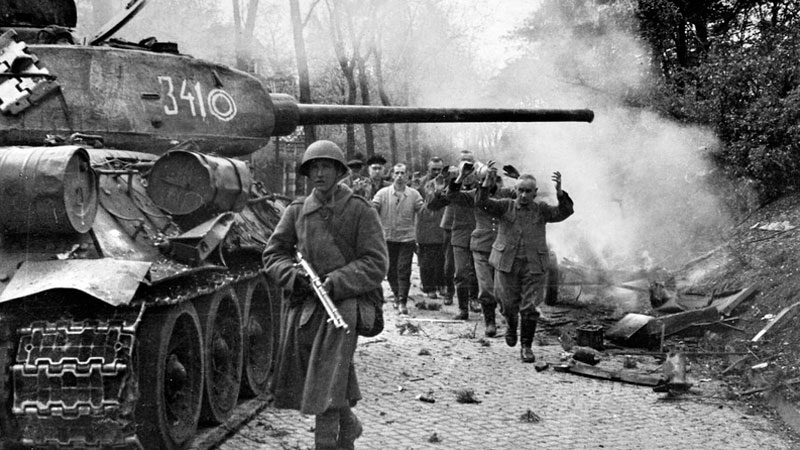
The Second World War was the conflict that broke out in 1939, between the Axis powers (Germany, Italy and Japan) and the Allies (England, France and the Soviet Union). This conflict cost the lives of 2% of the world population at that time (approximately 60 million people), the majority of civilians. This war is a sadness celebrated by the sum of the sufferings in the future, the deportation in the camps of concentration and work, the commanders in Europe for Germany, which become extermination camps where the Holocaust takes place; and in the United States and other countries of America against their citizens of Japanese descent; the massive massacres and the population and the combatants … see more … As a result of the invasion of Poland, France and Great Britain declare war on Germany. Attack of the USSR against Finland. 1940- The Germans invade Denmark, The invasion of Norway begins. There is a German campaign invading the Netherlands, Belgium and the North of France. Great part of the British and French troops managed to re-embark in Dunkirk and move to England. The Germans continue the offensive towards the south of France, until the redemption of this. The battle of England begins: Germany launches continuous attacks against the south of England, to prepare the invasion of the island; However, in the case of the invasion of Germany, the control of airspace and the part of England have become apparent.
WHAT IS THE HOLOCAUST?
The holocaust refers to the genocide or systematic and deliberate extermination of a social group for reasons of race or religion. When used with its own name, reference is made to the extermination of Jews in Europe carried out by the Nazis in World War II. The main reason for this human disaster is that they were considered a foreign race that could not be integrated into European culture, for some they were the embodiment of evil and the antithesis of the Aryan race (superior to the rest of the races and destined to dominate the world). When the Nazi regime came to power in Germany in 1933, it immediately adopted systematic measures against the Jews. Everyone who had distant Jewish descent was automatically considered Jewish, regardless of whether this individual was a member of the Jewish religious community or their place of birth. At the beginning of the Second World War, almost two million Polish Jews were under Nazi power, ghettos were established throughout Poland, and Jews were forced to concentrate there, once the resettlement was completed, the ghettos were cordoned off and isolated with a fence or a wall. Anyone who tried to leave ran the risk of being sentenced to death or shot dead on the spot by the guards. Later a new method of extermination was devised: the concentration camps, which functioned as authentic death factories, had gas chambers, where many Jews died in them. Over the years numerous Jews from all over Europe (France, the Netherlands, Italy, Germany, Hungary, Spain, etc.) were transferred to the fields, and employed as labor in industries; some were subjected to medical experiments, others died because of hunger, diseases or executions. The victory of the allies prevents the Nazi regime from completing its extermination program. However, the balance was terrifying. All historical investigations and calculations agree that between five and six million Jews were killed. Despite significant documentary evidence about the systematic nature of extermination, certain people deny the Holocaust or minimize the number of murders produced.
Participants in the Second World War
Winston Churchill (1874 – 1965) Lord of the Admiralty between 1911 and 1915 saw his political career compromised as a result of the British military defeat at Gallipoli. Successor of Chamberlain from 1940 as prime minister led with firm hand the destinies of Great Britain in the difficult trance of the 2nd. World War. Mentor of the narrow Anglo-American alliance during the government of F.D.Roosevelt. In 1965 he died in London (England), being recognized as the most prominent statesman and British politician of the XX Century
Neville Chamberlain (1869- 1940 ). Primer ministro británico en el crucial período de 1937 a 1940. Propulsor de una política de apaciguamiento con el régimen de Adolf Hitler, suscribe, en setiembre de 1938 el Pacto de Munich acordando la cesión por parte de Checoslovaquia de la región de los Sudetes a Alemania Un año después el ataque nazi a Polonia desata la Segunda Guerra Mundial. Derrumbado políticamente por el fracaso militar del cuerpo expedicionario británico en Noruega y la invasión nazi a Francia, una de las ofensivas militares terrestres mas espectaculares de los tiempos modernos. En medio de una tensa sesión en la Camara de los Comunes Leopold Amery lanza contra el la histórica frase de Cromwell ‘Digo que partas y nos libraremos de tí. !Vete en el nombre de Dios¡. Chamberlain dimite en mayo de 1940. Lo sucede Winston Churchill.
Charles De Gaulle (1890 – 1970) Military and French statesman, three times he directed the destinies of his country. Main leader of the forces of Free France during the Second World War. In 1958 he was specially summoned to form a government by President Coty in the face of a serious military and political crisis before the independence of Algiers, a few months later he assumed the position of president of the brand new Republic V.
Dwight D. Eisenhower (1890 – 1969) Military and US politician He played a leading role in the military during the 2nd. World War, under the orders of General Marshall. He led the expeditionary forces in Africa in 1942 and commanded the invasion of Sicily that led to the capitulation of Italy. He had under his command the unified command of the greatest allied expedition during the war, the Operation Overload that culminated in the successful landing in Normandy in June 1944. Twice the president of the USA. from 1952 he directed the destiny of his country, defending his interests and those of the free world during the difficult years of the Cold War with the USSR.
Adolf Hitler (1889 – 1945) German of Austrian origin. Instadordor of National Socialism. Chancellor of Germany in 1933 and one year later president and Furher (undisputed leader). Propeller of the German expansionism that unleashed the Second World War, visible ideologist of Nazism and responsible for the greatest genocide in modern history.
Benito Mussolini (1883 – 1945). Italian dictator and leader of fascism from 1922 to 1943. He took Italy to war by allying himself with Germany and Japan. Disposed and imprisoned by order of King Vittorio Emanuelle III was rescued by Nazi commandos to head in support of Hitler the ephemeral republic of Salo in northern Italy. He died executed by communist partisans during the last days of the Second World War near Lago di Como.
Henri-Phillipe Petain (1856 – 1951). Militar y político francés. En febrero de 1916 en pleno desarrollo de la Primera Guerra Mundial se produce un ataque masivo aleman sobre las posiciones defensivas francesas en Verdun. El debilitamiento progresivo de la defensa aconseja al general Joffre relevar el comando y asignarselo al general Petain quien lograra luego de algunos retrocesos a lo largo de una sangrineta batalla que se desarrollara a lo largo de diez meses, recuperar y mantener la posicion. Petain acuñara en una frase su determinacion de resistir a los alemanes ‘No pasaran’. Casi tres décadas mas tarde, como participe de la defensa de Francia durante la Segunda Guerra Mundial el destino le reserva una actuación que la historia juzgara deshonrosa.
Pius XII (Pope) (1876 – 1958). Eugenio Paccelli, Secretary of State since 1930 and former Apostolic Nuncio in Germany. Successor of Pius XI in 1939, directs the destinies of the Church in one of the most turbulent periods of history at the outbreak of World War II shortly after assuming.
Franklin Delano Roosevelt (1882-1945) American politician. In 1933 he assumed as president of the USA. succeeding Herbert Hoover. His assumption marks the beginning of an unpublished and perhaps unrepeatable period in the American institutional history to be re-elected from there over three consecutive periods and lead his country to the Second World War.
Yosif Stalin (1879-1953) Revolutionary and Russian communist politician from Georgia. Dictator and leader of the Soviet Union from 1922 until his death. Responsible for the process of collectivization and industrialization of the country and also the hundreds of thousands of deaths resulting from purges to opponents on which he cemented his power. During the end of his administration Russia reached the status of great power once the Second World War ended. He died probably killed by political rivals afraid of becoming his next victims.
Harry S. Truman (1884 – 1972). American politician, native of Missouri. During 1945, he was elected as vice president of Franklin D. Roosevelt, assuming the death of this as 33rd. US president It directs the destinies of the nation during the last months of World War II, in which it takes the controversial decision of ordering the atomic bombings on Japan. In 1948 he was reelected by a large majority as president, having to face the Berlin crisis and the Korean conflict as a result of the ‘Cold War’ initiated with the Soviet Union.
Development 1939-1945 in the Second World War
The Second World War put in war the powers of the Axis (Rome, Berlin, Tokyo) with the allied countries which were (Great Britain, France, Holland, Luxembourg, Norway, Denmark, Poland, the USSR, China and the United States). The period of this war goes from 1939 to 1945.
In the month of March of the year 1939 Hitler invades Austria and annexes it to Germany, neither the League of Nations, nor France, much less England took half before this invasion, much less before the speech of the Nazism. They were presented to the media as «a peaceful invasion.» For the year of 1939, Russia signs with Lithuania, Latvia and Estonia for mutual aid which soon becomes a republics
Socialists. Germany invaded Denmark and Norway Derrotándolas, the same goes for Holland, Belgium and Luxembourg. After getting these apparent Victories, the Nazi armies were taking French possessions until you get to the Maginot Line.
In June 1940, when German troops were taken to Paris, Italy declared war on France.
The coasts of the Atlantic and those of the channel of La Mancha were occupied by the Nazis and in the south a French colonial government is formed under the command of Petain, while in France Charles de Gaulle made a call to all the French compatriots to work on the so-called «France Fighter
Meanwhile England without any political support faced the German troops by land neutralizing the Nazi forces, these organizations and military strategies were developed by Wiston Churchill. Italy attacked the Balkans, taking Greece, the island of Crete and Yugoslavia, which by the so-called «Triparty pact» signed in September 1940 between Germany, Italy and Japan, form a new world order by subjecting Europe and Asia to their decisions. It is in this way that Germany takes from Hungary, Romania, Slovakia and Bulgaria appropriating from almost all of Europe. The Russian invasion is given on June 22nd, 1941. It is Germany who begins this invasion by first occupying the part of the Baltic regions, Moldova, Belarus and part of Ukraine and Kiev until arriving at the ports of Leningrad and Moscow, the more when the Nazis launch and attack these two last cities, they were defeated and they saw the need to Leave Russian territory, leaving in their retreat all almost the entire team of combat. United States enters a war when Russia faced Germany, Japan did not see fit to intervene in this part of the conflict and decided to attack To the United States and England, while maintaining
Conversations with Washington to distract the
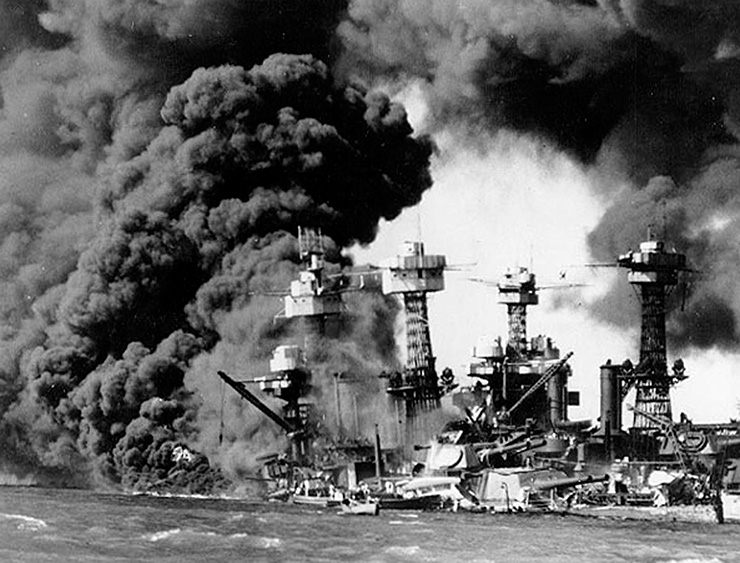
Americans, in the Pacific on December 7, 1941, aviation and Japanese fleet gave a rough blow to the most important naval base in the United States in Pearl
Harbor located in the Hawaiian Islands, destroying almost completely; But at the same time in Singapore they attacked and bombarded British base. In this way, Japan destroys the strategic points of the countries in the Pacific and the Far East. This is how the United States enters the war Declarándoselaed Japan at the same time that Germany and Italy declared it to the United States.
BATTLES
Tungsten, key mineral in the Second World War
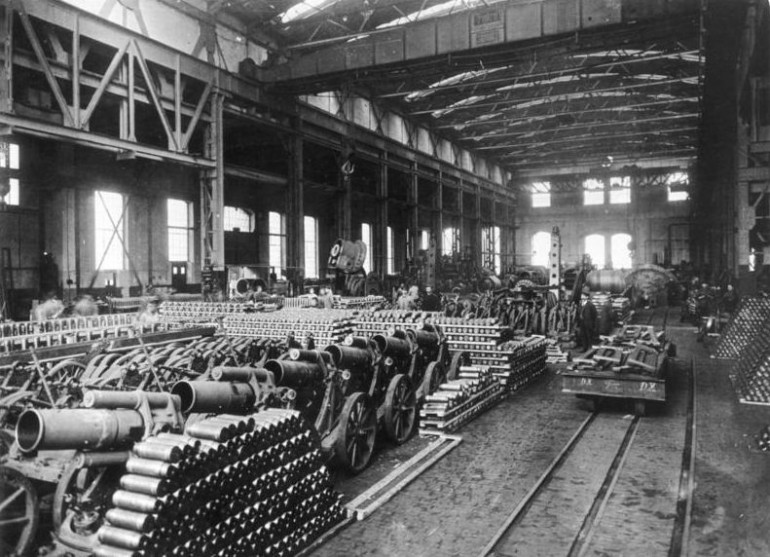
The Second World War is known, in addition to all the atrocities that took place, by an arms race in which all the countries that were on the front, were looking for ways to improve their weapons, both at the level of scope , as a power of destruction but also to make the enemy do less damage to the tanks, gaining resistance and durability, thus being able to continue to fight, despite having received shrapnel or have impacted a grenade. In the latter case, the material that managed to give the strength to these weapons was the tungsten, becoming, as you will know then, in the key mineral of the Second World War.
The Pearl Harbor attack
The attack of the Empire of Japan on the naval base of Pearl Harbor on December 7, 1941 was the trigger of the inclusion of the War of the United States. Japan was engaged in the Second Sino-Japanese War that faced China for the possessions of Taiwan, Manchuria, and fishermen. He tried to conquer more Chinese territory and started in 1937 the invasion of the north and east of this country. In this context the United States intervened in the contest by making a blockade of metal and oil on Japan. To conclude with this blockade the US asked Japan to abandon Chinese lands, something that it refused to accept, the tensions between the two countries began.
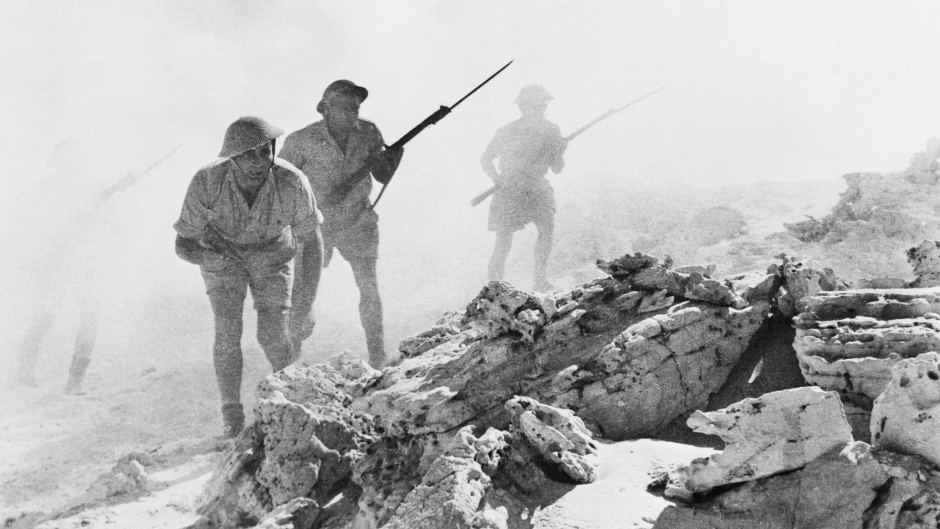
Battles of the Alamein
The start of the Second World War was brilliant for Germany, quickly managed to conquer Europe and began operations of invasion and conquest of Russia and Africa where the German military force was known as Afrika Korps. This contingent was led by the magnificent quarterback Erwin Rommel also known as «the Desert Fox». The characteristics of the terrain and the efficient German tanks, coupled with the insight of its general, allowed Hitler to be quickly controlled by much of Africa, now he had to maintain it.
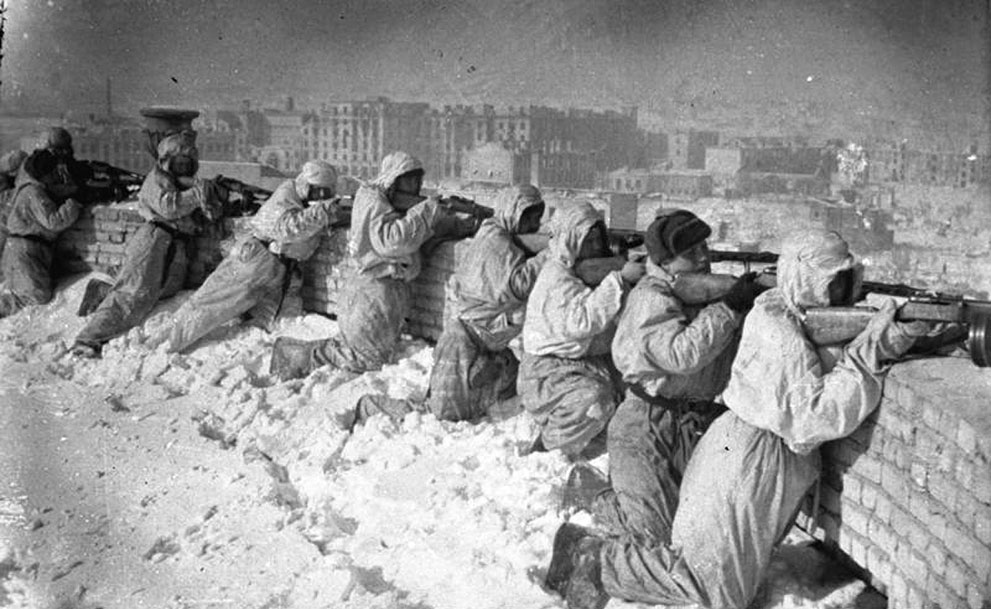
Battle of Stalingrad
The battle that took place in the city of Stalingrad, current Volgograd, between 23 August 1942 and 2 February 1943, is undoubtedly one of the bloodiest clashes in the history of mankind. It faced the German Wehrmacht and its allies with the Red Army of the Soviet Union, which would ultimately be victorious in this contest.
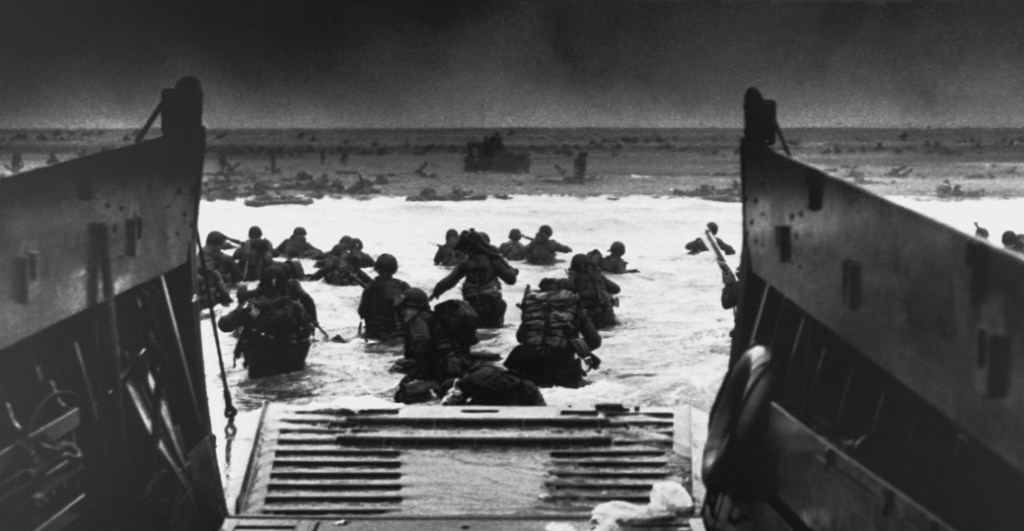
Normandy Landings
Operation Overlord, this was the key name that the Allies put to the battle or landing of Normandy, an assault by sea and air of the French north coast dominated until 1944 by Nazi Germany.
On June 5, it was the date chosen by the Allied forces to carry out the largest amphibious assault in history. However, the weather conditions forced a day to delay the assault.
Thus on June 6, 1944, known as «D-day», nearly 156,000 American, British and Canadian soldiers landed on the beaches of Normandy. Once the north of France was liberated, Allied armies had to overthrow German rule in Europe and liberate Paris.
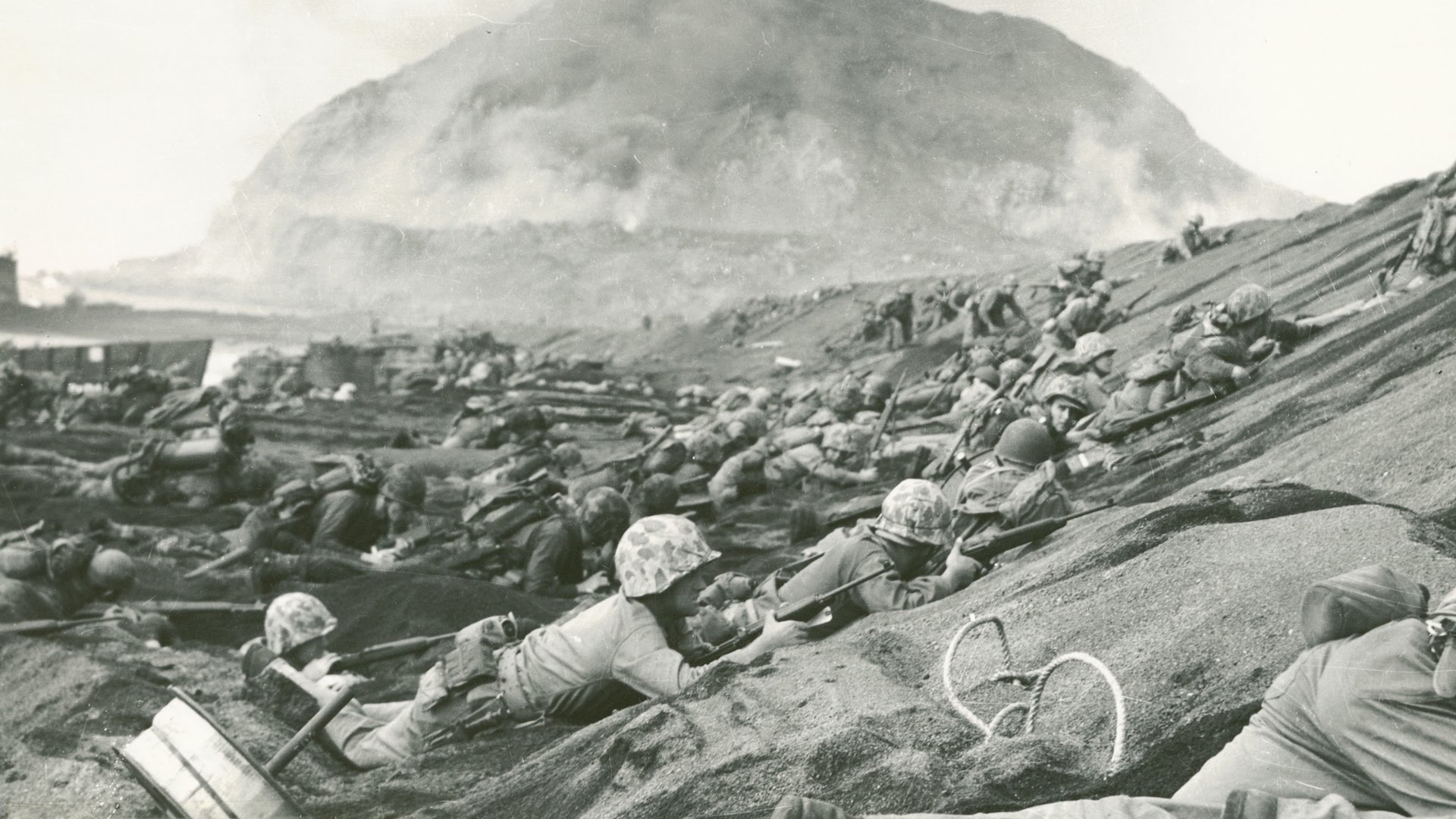
Battle of Iwo Jima
The attack on the naval base of Pearl Harbor on December 7, 1941, was the declaration of the US War on the Empire of Japan. Among them would be the war of the Pacific for the control of many islands of this ocean. After the damage inflicted on the attack on Pearl Harbor Bay, the Japanese fleet had done nothing but decline due to American attacks. The situation became critical for Japan in October 1944 when, after the Battle of the Gulf of Leyte, virtually all of the Japanese ships and vessels had been left unused even by supply.
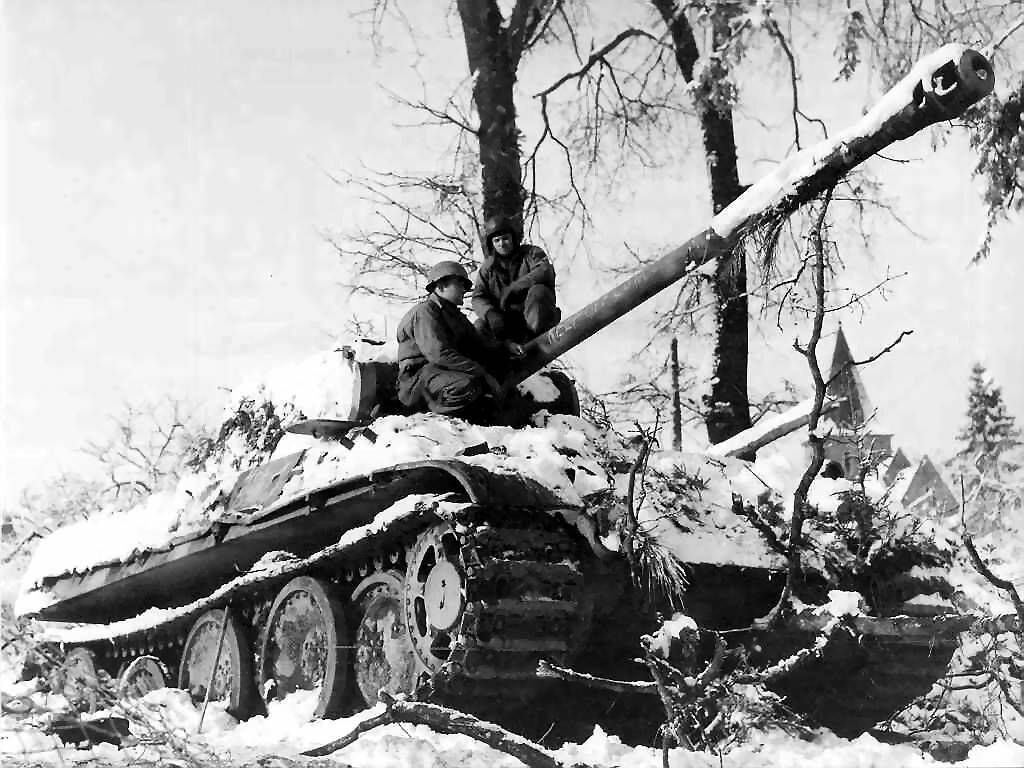
The Battle of the Ardennes
In the summer of 1944, thanks to Operation Overlord and the valiant landing of Normandy, the Allied forces had managed to open a gap in the north of France and to seize an area occupied hitherto by the German armies. Germany was against the ropes, with two open fronts. The west, where it had to confront the many troops who had landed in Europe after Operation Overlord, and the east where the Wehrmacht had to defend the German territories after failing in the attempt to invade the USSR.
How has the Second World War influenced the current era?
When the war was nearing its end, the Allied Powers agreed to establish an international body that was stronger than the failed League of Nations, which could not avoid the conflict. The founding Charter of the United Nations was the combined effort of 50 countries, whose representatives met in April 1945 at the San Francisco Conference.
With the end of European colonialism in sight, especially in Africa and Asia, the smaller countries had a guaranteed voice, and the United Nations took responsibility for promoting economic and social cooperation and the independence of Towns that used to be colonies.
At the same time, economic organizations such as the International Monetary Fund and the General Agreement on Tariffs and Trade (now the World Trade Organization) were created to help open markets and avoid a Global depression like the one that helped create the situation that led to the war.
With the Holocaust and other horrific crimes still recent, countries recognized the benefits of a world with established standards and shared values.
The Allies established the international military Tribunal to prosecute crimes against peace, war crimes and crimes against humanity, culminating in the Trials of Nuremberg in 1945 – 1946. He was the forerunner of the current international criminal Tribunal. The shared horror also helped create the Universal declaration of Human Rights in 1948 and the Geneva Conventions of 1949 on the protection of military and civilians in wartime.
Personal Opinion
My view is that this war was started by the resentment that Germany had after the First World War. Germany wanted to expand its empire even further. Germany had allies like Italy could be with Mussolinni in command. War was one of the conflicts in which more people died. While Japan wanted to expand its empire by the Pacific America was not willing to accept it. The trigger for the United States to enter the war was the attack on the part of the Japs to the American base of Pearl Harbor.
 El blog de Xime